Sump Pump Failure: Preventing Basement Floods in Knoxville
July 7, 2026
Why sump pumps fail and how Knoxville homeowners prevent basement flooding: warning signs, backups, insurance, and what to do after a flood.
July 10, 2026
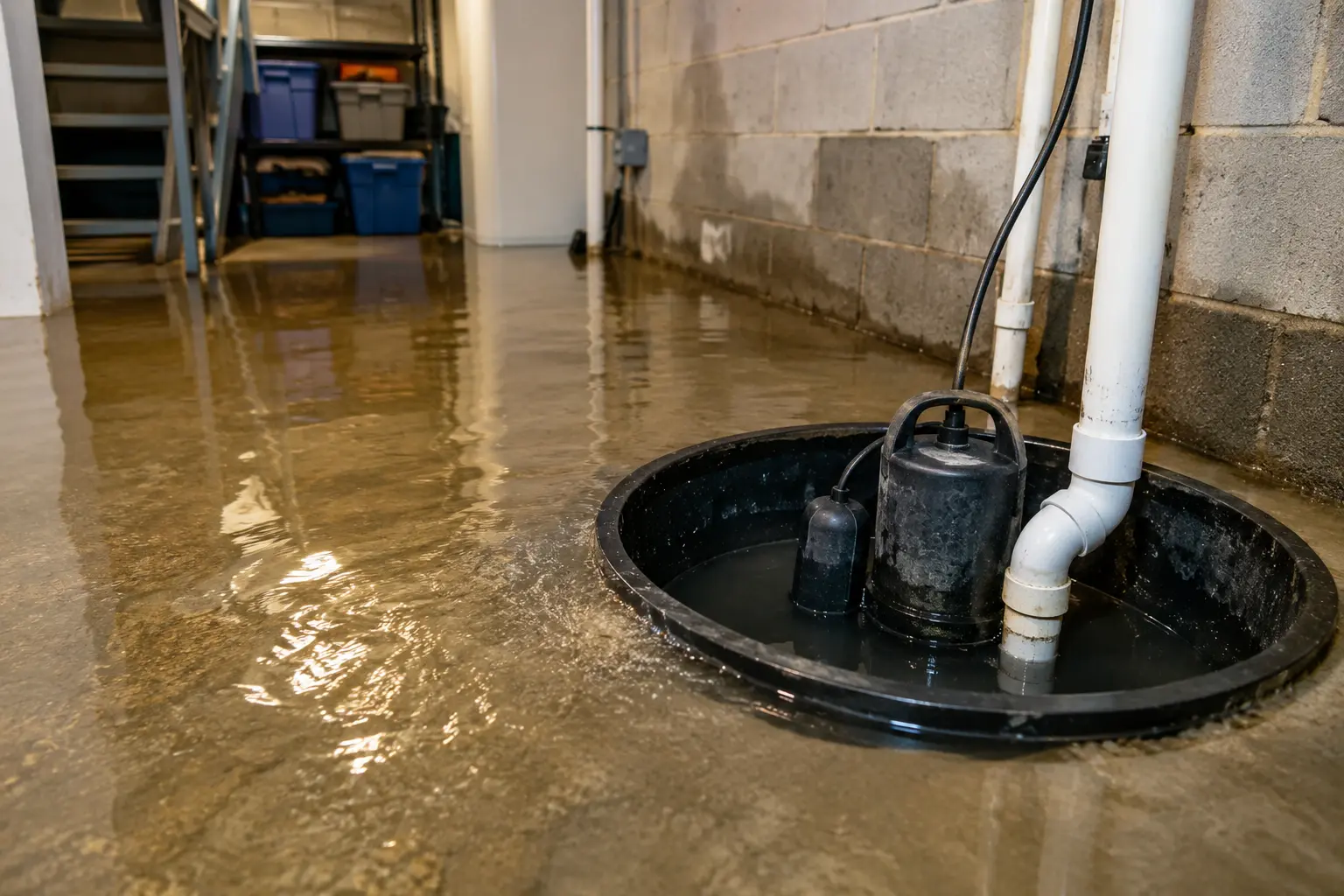
A hard Knoxville rain, a quick power flicker, and suddenly the one thing between your basement and a flood quits. Sump pump failure is one of the most common causes of basement flooding. East Tennessee's storm season makes it a real risk. This guide covers why sump pumps fail, the warning signs to watch, and how to keep your Knoxville basement dry.
Sump pumps work hard and tend to fail at the worst time: during a storm. A few causes account for most failures.
Storms knock out power exactly when the pump is needed most. Without a battery backup, the pump stops and water rises fast. This is the number-one cause of a flooded basement.
The float tells the pump to turn on. If it jams against the pit wall or sticks, the pump never runs even though it still has power.
Debris, or a frozen discharge line in a Knoxville cold snap, blocks the water from leaving. The pump runs, but nothing actually drains.
A pump too small for heavy rain cannot keep up. Most pumps last about ten years, and an aging one can quit without warning.
Catch these early and you avoid the flood entirely.
Listen for grinding noises or a motor that runs constantly. Watch for a pump that cycles on and off rapidly, visible rust, or a pit that stays wet. Any of these means it is time to service or replace the pump before the next storm.
Knoxville and the surrounding area see heavy spring and summer storms, and local clay soil holds water against foundations. That combination puts steady pressure on your sump pump right when the power is most likely to flicker. Homes near the Tennessee River or in low-lying spots face the highest risk. A backup plan matters more here than in drier climates.
Prevention is far cheaper than cleanup. Build in these safeguards now.
A battery backup pump keeps working when the power goes out. It is the single best defense against storm-season flooding in Knoxville.
Pour a bucket of water into the pit every few months and confirm the pump kicks on. Clean the pit and check the float once a year, ideally before storm season.
A second, higher pump plus a water alarm gives you both a warning and a backup if the primary pump fails.
This surprises many homeowners. A standard policy usually does not cover water that backs up from a failed sump pump. You typically need a water backup or sump overflow endorsement added to your policy. Review what the Insurance Information Institute says about water backup coverage, then call your agent before the next storm.
If you are already standing in water, safety comes first. Shut off power to the basement before you step in, and never touch electrical devices in standing water. Once it is safe, get the water out fast, because mold can start within 24 to 48 hours. Understanding your preparing for a flood helps you plan ahead. A crew like Rocky Top Restoration can extract the water and dry the space before it does lasting damage.
Not all sump pumps are equal, and the right type depends on your basement.
A submersible pump sits in the pit and runs quietly under water. A pedestal pump stands above the pit and is easier to service. Submersible models handle more water and hold up well in a wet basement.
A battery backup runs when the power fails, which is exactly when you need it. A water-powered backup uses your home's water pressure and never needs a charge. Either one is cheap insurance against a storm-season flood.
Most sump pumps last eight to ten years with normal use.
Test yours a few times a year and listen for changes. Replace the pump before it reaches the end of its life, not after. An old pump that quits during a storm is the most expensive kind.
A sump pump is one layer of defense, not the only one.
Grade the soil so it slopes away from your foundation. Keep gutters clean and extend downspouts several feet from the house. Seal foundation cracks, and consider a French drain if water keeps finding a way in. Together, these steps take pressure off the pump.
Often yes, especially in heavy rain. Without a working pump or backup, water in the pit has nowhere to go and rises into the basement.
Usually not under a standard policy. You generally need a water backup or sump overflow endorsement for that coverage.
Constant running, odd noises, rapid cycling, visible rust, or a pit that stays full. Service the pump when you notice any of these.
Power loss during storms is the top cause, followed by a stuck float switch and a clogged discharge line.
Most last eight to ten years. Test yours regularly and replace it before it fails, not after.
In storm-prone areas like East Tennessee, yes. Power outages and heavy rain often arrive together.
Every hour that water sits, the damage and the mold risk grow. Cut the power, get the water out, and dry the space quickly.
Rocky Top Restoration helps Knoxville homeowners recover from basement flooding. Our water damage restoration crew extracts standing water and dries your basement. After a bad storm, our storm damage team handles the larger cleanup so nothing gets missed.